The Year of PLF


About one year ago, Meredith Tack and I decided to focus our industrial design training on early education. The resulting project has attracted a lot of people for different reasons over the last 365 days. Now, along with Carey Spesard, we are preparing to wrap up our project in the coming months and share the entire process with active people. We are attempting to start a dialogue about the power of creativity in education and the truly good potential of design. Thanks for your support!

Movie Premiere

The kids in the Topeka Public Library Project Littlefoot session completed their stories. Now Project Littlefoot designers and transforming the stories and artwork into 2 short films. We are excited to announce the priemere of these movies on August 30th. The movie premiere is open to the public and starts at 6:30 p.m. in Marvin Auditorium at the Topeka Public Lirary. Refreshments will be provided, we hope to see you all there.

Finishing up...

Last week we finished up our last Littlefoot session.  All the audio clips, character models, promotional material, and miscellaneous background props have been created and documented.  As all pieces of artwork are returned to the kids.

Now the Littlefoot staff is taking all the footage and editing it into the final films.  Stay tune for the date and time of the premier.

Crafting a Story

We are only a few shorts sessions away from the end of this Littlefoot workshop. The kids have been very busy working on several different tasks to help build the story. During group brainstorming sessions the kids showed patience and flexibility as we pieced together their individual characters and ideas.
In our third iteration of a storyboarding activity, we used a whiteboard and magnetic photocopies of the characters to lay out a sequence of events. This adaptable medium allowed each child to have a chance to tell the story, moving the characters from begining, to middle, to end. This was also a good time for the kids to start building a rough script.
After we had an idea of how everything would come together the designers drew out a storyboard complete with moveable narration and word bubbles. This allowed the kids to visualize the flow of the story and discuss what changes needed to be made.
As we move into the production phase of this project we talked to the kids about animation processes and they all had a try at taking photos of their own creations in front of the green screen.
They worked with clay to finish up props and scenery for the movie.


And finally, the kids were excited to try out stop motion animation for the first time. They made a few tests with with clay creations and got a feel for how to plan motions, manipulate details, and understand timing issues.

Littlefooting Rob the Robot


As the current workshop comes to a half-way point, it's time for the designers to get to work. So far we have been observing the group and carefully planning each session ( which takes a lot of work ) but the kids have done all the real work. When it comes time to make the film, some scenes will require some of the main characters to interact in 3-D space. Right now we are preparing for those scenes by taking some of the main characters and increasing their level of fidelity while maintaining the original look. These pictures show the transition of Rob the Robot from a sketchbook concept to the beginnings of a 3-D interpretation.

Another Great TED Talk: Gever Tulley's Tinkering School


"Gever Tulley uses engaging photos and footage to demonstrate the valuable lessons kids learn at his Tinkering School. When given tools, materials and guidance, these young imaginations run wild and creative problem-solving takes over to build unique boats, bridges and even a rollercoaster!"

Art for our sake

We recently stumbled upon an article in the Boston Globe which explains the importance of art education and programs like ours.  It's a good read, check it out here: Art for our sake: School arts classes matter more now than ever - but not for the reasons you think

StoryStorming in Topeka, KS


Our current workshop includes a larger amount of kids than we've ever worked with. This is also the first time we've been on our own, during our first iteration we were accompanied by developmental psych students and staff. We have had fun with the kids over the past few weeks but it was time to get down to business if we plan to produce a short film. We started with an example of how a story can be made into a movie. In this case, we chose "Where The Wild Things Are." We explained that it was time to pull our many stories together to make the bigger, better story. We used giant pieces of paper and grouped up to consolidate our stories. From the few stories we created a list of props we need for the movie and the kids got to work!

Progress Update

We have now completed two sessions with both groups of kids at the Topeka and Shawnee County Public Library.  Both sessions went very well.

For the first session, as the kids arrived they were given time to make a personalized nametag.  We watched a feature on movie making and talked about stories and films.  The kids were given sketchbooks which they personalized and began to brainstorm on story ideas.

We started our second session with a short film about an animation technique we hope to use.  The film clip helped motivate the children to build their own characters and sets out of cardboard, construction paper, paint, markers, glue, or whatever they could find.  From here we will take these characters and sets and further blend them into one cohesive story.

T-Shirts

Check out the new T-shirts for the PLF staff:

Studio Tour


Over the summer Project Littlefoot was lucky enough to acquire studio space, which is now being used when not working directly with either group of children. Let us now give you a quick tour of our studio.

Our studio space is in a former classroom in the Art and Design Building at the University of Kansas. We have arranged the space to accommodate all of our needs.


Guests entering our studio are greeted by the welcome table with it's candy dish and sign in sheet.


Our dinning area has a cardboard chandelier and tape dinner plates.


Cutting table and conference room. Never mind the soccer ball.

Each session has its own table for storage of artwork and art supplies.


Finally our studio has a complete movie making area, which will get heavy use soon when story ideas start to come to life.

Educating the whole child


This is one of the first bits of inspiration that led the members of PLF to create our workshop.
Sir Ken led the British government's 1998 advisory committee on creative and cultural education, a massive inquiry into the significance of creativity in the educational system and the economy, and was knighted in 2003 for his achievements. His speech challenges the way we educate our children and the way we perceive intelligence.

Welcome new groups

We are just a few days away from our first summer class and very excited to welcome our two new groups at the Topeka library. If you are visiting the blog and your child is enrolled in the summer program please do not hesitate to say hello. We are looking forward to getting to know all of you.

More Than A Student Project, More Than Students


And so ends PLF's safety net of academia. We have graduated; all with Bachelor of Fine Arts degrees in Industrial Design. While our academic obligations have been met, the Littlefoot project is far from over. The department of design has agreed to house us during this transition period and we are in the process of moving to our new university-covered incubation space (pics of the new studio coming soon) in the Art and Design building at The University of Kansas.
Our next step in PLF is to prepare for the new group of kids, the next workshop will focus on accessibility. Parents will be more involved, they will receive weekly updates on their child's progress, we will also be seeking input from them on a regular basis.
While the flagship workshop was fun and effective, it was expensive. On the business side of things this is not a desirable quality. We'll be rethinking many of our methods and tools and making them cheaper and easier to obtain and use. This will make it easier for libraries and museums to afford and keep the service accessible to a broader range of children, one of our primary objectives.
Looking back on our first group, some of our most effective activities and subsequent material came from the most basic and open methods. Everyone in PLF is excited for this transitional time between acadmeic obligation and real world application!

PLF Workshop This Summer!

After a break to finish our last semester of school, PLF is gearing up for our summer workshop. We will be at the Topeka Library this summer. It's been a while since we've actually worked with a group of kids, most of this semester has been focused on spreading awareness of our project. In Topeka we will be working with two groups of kids and will have at least that many new stories coming out of the workshop!

Massive Change

The members of Project Littlefoot recently had the opportunity to attend a lecture by designer Bruce Mau. It was an uplifting experience after returning from the Industrial Design conference in Minneapolis. For the most part, the students (at the conference) appreciated our interpretation of design while some questioned if we were doing design at all. It was an eye-opening experience to say the least. Mr. Mau's lecture reassured the three of us that we are heading in the right direction. "Be the possibility."


We're in Business


Here they are! We'll be passing them out during conference. Just awkward enough that you won't want to put them in your wallet.

IDSA merit award

The members of Project Littlefoot belong to an organization, IDSA (Industrial Designer's Society of America). One member, Patrick Guy has been selected as the University of Kansas merit scholar for IDSA. He will be speaking at the IDSA midwest conference in Minneapolis. Congrats!

Principles of PLF


Design Thinking

A creative process where groups build concepts by allowing a free flow of shared ideas. Project Littlefoot promotes design thinking for education by offering a creative team experience at an early age. Program directors are instructed to facilitate group interactions between the children while deferring judgement and encouraging wild ideas, in an effort to increase the creative output of the children.

Creativity
An expressive intelligence which inspires confidence. Creativity enhances problem solving skills leading to meaningful and personalized learning opportunities. Along with a supportive environment, children are given all the tools they need to express their ideas. A creative toolkit is given to each child, which they are allowed to personalize however they want. Inside the box are high quality materials and accessories that they can use to express their ideas.

Narrative

A universal way of expressing thoughts and building an understanding of the world around us. Narrative skills allow humans to share experiences. Children learn to represent ideas through stories, a valuable life skill. Through the use of felt boards, storyscapes (a storyboard landscape), and acting, just to name a few, children learn the structure of stories as they construct their own narration.

Collaboration

Group participants work together to reach a common goal. Children learn the importance of being a part of something larger than themselves. Communication skills improve and shared interest creates a community. The program sets out to create one story, thus all the activities are done as a team. Individual ideas are encouraged, but compromises and team mentalities are created through the program.

Dave Eggers

During the development of Project Littlefoot we drew inspiration from Dave Eggers and his outlook on education. Please check out his TED talk below, as well the Once upon a school website (ours is story #168)

Summer Plans

We are currently looking for places to host Littlefoot workshops for this summer. We would love to offer it as a class at libraries, art centers, or museums. Ideally, the program would last 2-4 weeks but can be adjusted to fit the schedule of the venue. If you are interested in hosting a Littlefoot workshop please let us know.

Project Littlefoot allows children a chance to participate in the development of something larger than themselves. The most important thing that a child takes away from the program is learning to use narrative to express their ideas, a universal life-skill.
When a child can express their thoughts and ideas within a peer group they begin to understand the importance of communication. Learning to play, create, and work together is a valuable social experience that they will carry with them throughout their lives.
Project Littlefoot goes beyond nurturing the development of narrative skills and expression to providing positive feedback and affirmation. Creative developments are not only encouraged, they are shared with the world and placed on a virtual pedestal.

Common activities in the program include drawing, painting, modeling, storyboarding, puppet making, and acting. Sessions with the kids are adaptive and flexible each is catered to the specific group of kids.
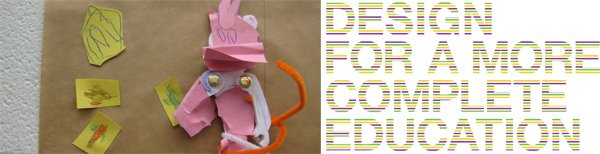
What is Project Littlefoot?

Project Littlefoot is a creative learning program for children. The workshop encourages the value of teamwork, emphasizes narrative skills, and provides the opportunity to apply creative expression while developing a single story. After a story is developed by a group of kids, Littlefoot designers translate the kids' ideas and material into a short animated film that is shared on a kid-friendly website.